1. Start Early with a Landing Page That Works Before the Sale
The strongest BFCM pages go live in October, not on Black Friday. Build one permanent asset that moves through three states on a single URL: before the sale, it captures early-access sign-ups; during the sale, it carries the offer and the deadline, afterwards, it redirects to December gifting so the traffic keeps earning. Point everything at it. Write for October search intent, which is research rather than purchase, and keep the URL stable year to year so ranking equity accumulates instead of resetting every November. Everything you capture early is audience you don’t have to pay to acquire later.
2. Build Anticipation Before You Reveal the Offer
Give people a reason to be paying attention before you ask them to buy. A teaser that shows the category but not the number. A waitlist promising first access rather than a bigger discount. A countdown only subscribers can see. The mechanic that matters is the sign-up attached to each teaser, because engagement before the offer means better inbox placement when the offer lands. Subscribers who opened three teasers are far more likely to open the fourth, which is the one with the money in it.
3. Make Email and SMS Work as One System
Split them by job rather than content. Email carries the story, the range and the browse. SMS carries immediacy: it’s live, it ends tonight, this is the last hour.
Suppress across channels so a customer who bought from the email doesn’t get the text two hours later. And give deliverability an October check, because a sender reputation built over eleven quiet months gets tested hard in one loud week.
4. Personalise Around What Customers Actually Do
A name in a subject line is not personalisation. Build the messaging around behaviour instead: someone who viewed a product and didn’t buy sees that product lead, an abandoned cart sees the offer applied to what they left, last year’s BFCM buyer gets treated as the seasonal shopper they are. Someone who opened your last five emails and clicked none needs a new angle, not a higher frequency. Sometimes the right call is to not send at all, which protects your reputation for the sends that convert. Relevance lifts revenue per recipient without adding a single message.
5. Launch Loyalty That Outlives the Weekend
BFCM is very good at attracting people who want a discount and nothing else, buy once at your worst margin, and never return. Loyalty converts that transaction into a reason to come back, provided it’s a retention structure and not a token points scheme. Enrol BFCM buyers automatically and show their points at checkout, because a balance sitting in an account is an open loop that brings people back in January for free. Build it in September and promote it during BFCM. BFCM should create customers worth keeping, not just transactions worth celebrating.
6. Turn Reviews into a Conversion Tool
During peak season, every product page in your category looks identical: same discount, same urgency, same photography. What differs is whether a shopper believes the product is any good. Prioritise recent reviews, since one from last month outweighs one from three years ago. Ask for specifics, collect photos and video, and place the proof where hesitation happens: product page, cart, checkout. Your customers sell the product more convincingly than your marketing does, and during a weekend when a shopper has three competing tabs open, that is the whole difference.
7. Give VIPs Genuine Early Access
Your best customers will buy during BFCM regardless. The choice is whether they buy at the public discount alongside everyone else or at a moment you built for them. Define VIP by something real: twelve-month spend, order count, engagement recency, and give them a 24- or 48-hour window with an offer that is actually better, not the same one wearing a new subject line. It pulls demand forward and eases load off the peak. Deciding who deserves that treatment is its own discipline, and we go deep on it in BFCM Segmentation: Stop Sending the Same Offer to Everyone. Early revenue is easier revenue, arriving before the inbox crowds and before competing discounts are visible.
8. Run a Double-Sided Referral Campaign
During BFCM, people actively ask each other for recommendations, and a referral programme is how you enter that conversation. Reward both sides, since one-sided referrals feel like unpaid labour. Give people a link they can paste without explaining anything, and surface it at peak goodwill, which is immediately post-purchase: order confirmation, shipping update, delivery note. This is customer-led acquisition, and it carries trust a paid partnership can’t, at a cost you only pay on conversion during the most expensive ad fortnight of the year.
9. Use AI to Remove Friction, Not Add Noise
Shoppers now arrive having already used AI tools to research and shortlist, so your product information has to read well to a machine as well as a person. The useful applications are unglamorous: recommendations that respond to session behaviour, merchandising reordered by relevance, review summaries that save reading two hundred entries. Keep your a person. The useful applications are unglamorous: recommendations that respond to session behaviour, merchandising reordered by relevance, review summaries that save reading two hundred entries. Keep your product data complete and structured: materials, dimensions, care, compatibility, because increasingly it’s read by something that summarises before a human sees your page. The goal isn’t to make more marketing faster. It’s to make the next interaction more useful.
10. Make Gift-Buying Decisions Easier
A large share of peak traffic is people buying for someone else, working from a vague sense of what the recipient wants. Faced with four hundred products, they leave. Curate instead: guides by recipient, by price band, by category, and bundles that solve a whole occasion in one purchase. These double as content assets, and “Gifts Under £50” is a real search with real volume that a page built in October has time to rank for. Put a star rating beside each product, because a recommendation is exactly what a gift buyer is looking for. Make the decision easier, not the catalogue bigger.
11. Create Urgency Without Deepening the Discount
The reflex when a sale underperforms is to cut harder, which trains customers to wait and comes straight out of margin. Urgency moves people without moving your price: flash sales in genuinely short windows, countdowns tied to real deadlines, limited availability where stock really is limited, VIP-first drops that create visible momentum. The line that matters is real versus manufactured. A countdown that resets on page reload isn’t urgency, and the customers sharp enough to notice are usually your best ones. Done honestly, urgency lifts conversion at the same discount, which is the only way to grow peak revenue without giving away more margin.
12. Remove Checkout Friction with BNPL (Buy Now, Pay Later)
Most of the time price causes cart abandonment, and BFCM makes it worse. Even a discounted $300 cart can make shoppers hesitate. Buy Now, Pay Later (BNPL) fixes that. There are a lot of providers that split a purchase into small, interest-free payments. $300 becomes “4 payments of $75.” That feels manageable, so shoppers add more to their cart. Merchants who offer BNPL see higher conversion and higher average order value. Setup is simple. Most providers plug straight into Shopify. Add it as a visible payment option at checkout, then promote it on product pages and in your BFCM marketing too. Adding BNPL can be a powerful option to maximise your BFCM sales.
13. Turn BFCM Buyers into Long-Term Customers
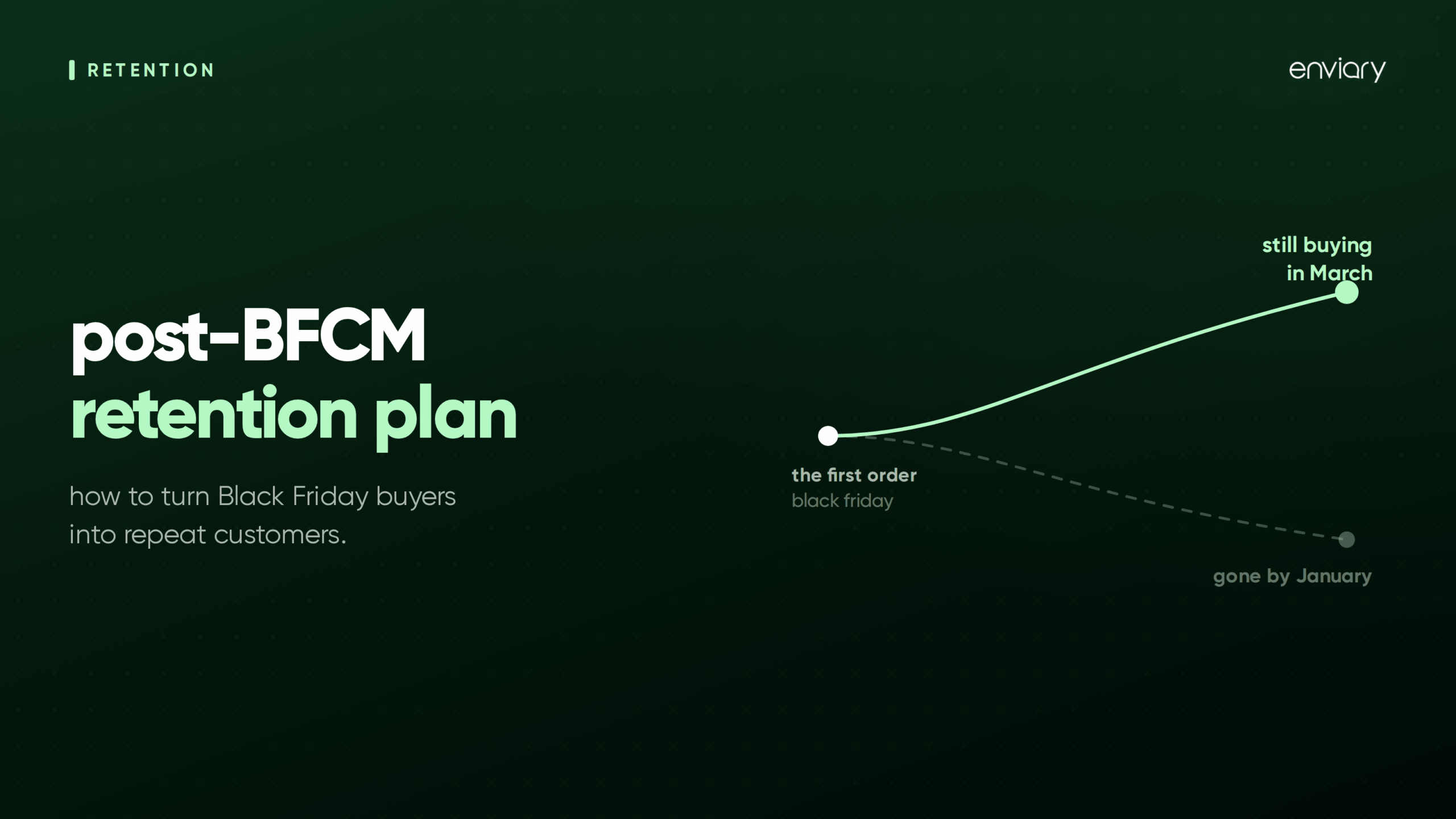
This is where the weekend is actually won or lost. BFCM doesn’t end at checkout; it ends in February, when you learn whether the people you acquired at a discount ever came back. Have the post-purchase machinery live before the sale, not drafted: onboarding flows rather than bare confirmations, review requests timed after delivery, loyalty enrolment with visible points, cross-sells based on what they bought, a dedicated second-purchase campaign for the BFCM cohort. Then measure the things that matter: new versus returning split, repeat purchase rate at 30, 60 and 90 days, revenue by segment, AOV by cohort, email and SMS revenue separately, unsubscribe rate. A record weekend built on one-time discount buyers with a 4% repeat rate is worse than a smaller one that produced customers. BFCM revenue is a number in November. BFCM customer value is a number in March.
Time for BFCM Action
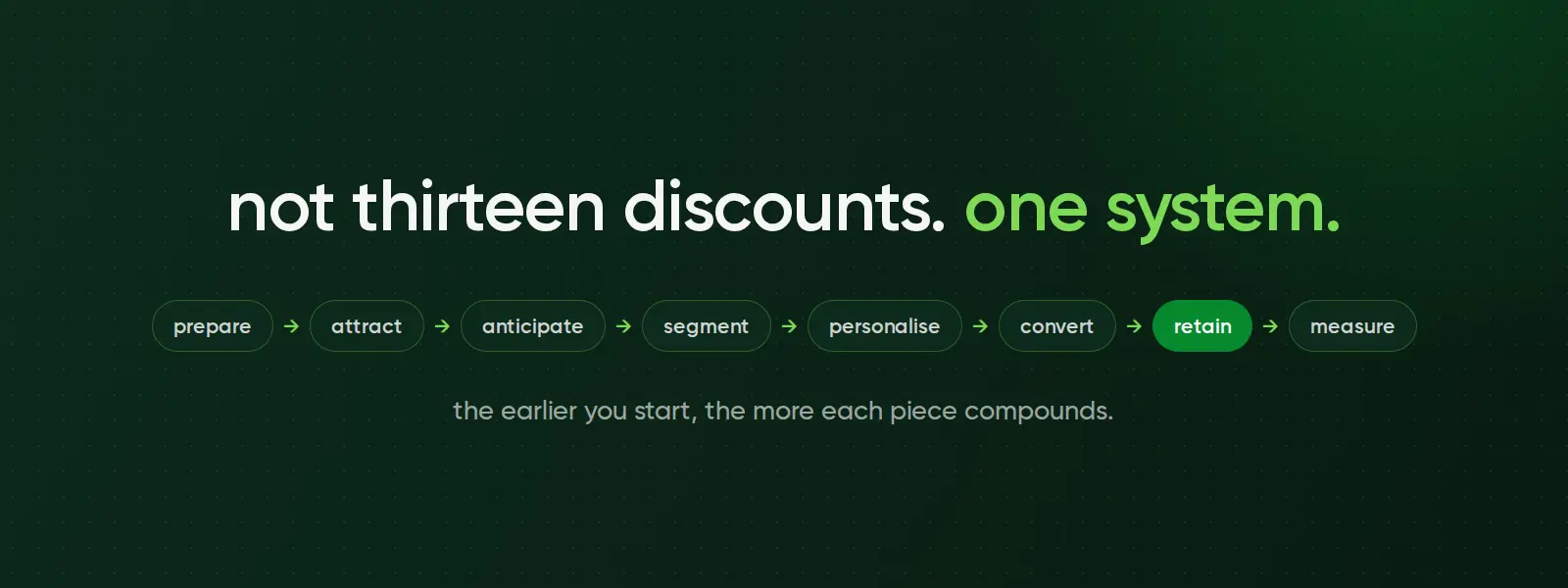
None of the thirteen asks you to rebuild your marketing. They ask you to make the right adjustments early enough that they compound: a landing page live in October, flows switched on before the traffic arrives, segments defined while there’s still time to test them. The brands that win BFCM don’t just plan how to get the order. They plan what happens after it. Want us to build that system before the inbox gets crowded?